Treatable conditions
Is SureSmile® right for you?
Learn more about the different types of orthodontic issues SureSmile® may be able to treat.
Treatable conditions
Overcrowding
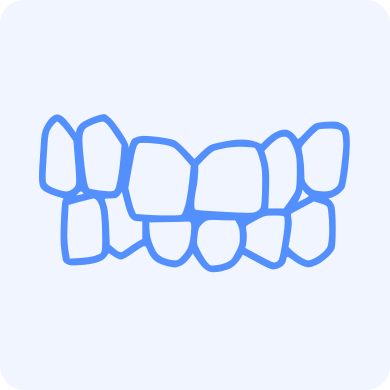
Overcrowding occurs when your teeth are too close together. When your jaw doesn't have enough room for your teeth to sit comfortably, they shift and overlap. Overcrowding can cause your teeth to push forward, pull backward, or invade the space of surrounding teeth.
RELATED PROBLEMS
Overcrowding makes it difficult to brush and floss correctly. That can allow tartar, plaque, and harmful bacteria to build up and cause oral health problems like tooth decay and gum disease.
TREATING OVERCROWDING
If your overcrowding can be corrected by shifting your teeth and does not need additional treatment, SureSmile® clear aligners may work for you. Talk to a doctor to find out if SureSmile is right for your particular case.
Overbite
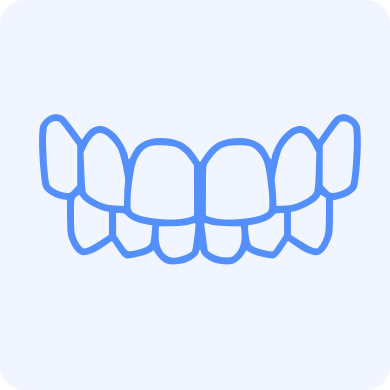
An overbite occurs when your top front teeth overlap your bottom front teeth. It's normal to have a slight overbite, but extreme overbites, also known as deep bites, can cause problems. If your top front teeth cover more than 20% of your bottom front teeth when you smile, you may have a deep bite.
RELATED PROBLEMS
Slight overbites may not need treatment. A deep bite, on the other hand, can cause difficulty breathing, tooth decay, and gum disease. More severe overbites may even cause jaw disorders, jaw pain, and headaches.
TREATING AN OVERBITE
If your overbite can be corrected by shifting your teeth and does not need additional treatment, SureSmile® clear aligners may work for you. Talk to your doctor to find out if SureSmile is right for your particular case.
Crossbite
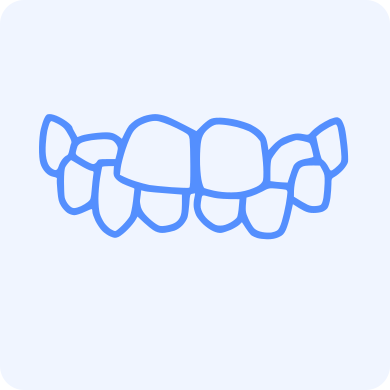
A crossbite is a type of misalignment that occurs when some of your upper teeth sit inside your lower teeth. This can happen anywhere in your mouth, and it can happen with groups of teeth or just one tooth.
RELATED PROBLEMS
If you have a crossbite, your teeth may grind together in the wrong places, which can lead to chipped teeth and worn-down gums. Severe crossbite can also cause lopsided jaw growth, jaw disorders, and pain, and you may find it difficult to perform everyday tasks like eating, drinking, and speaking.
TREATING A CROSSBITE
If your crossbite can be corrected by shifting your teeth and does not need additional treatment, SureSmile® clear aligners may work for you. Talk to a doctor to find out if SureSmile is right for your particular case.
Underbite
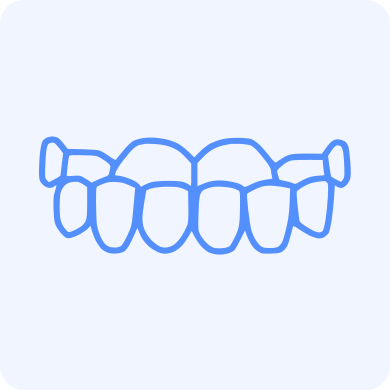
An underbite occurs when your bottom front teeth overlap your top front teeth when your mouth is closed. A slight overbite is normal, but any underbite is considered a misalignment and will likely need treatment.
RELATED PROBLEMS
An underbite can cause jaw disorders, making it difficult or even painful to chew or speak. Your teeth may wear down more quickly than usual. You may breathe through your mouth and suffer from chronic bad breath or sleep apnea.
TREATING AN UNDERBITE
If your underbite is caused by tooth placement rather than jaw placement, SureSmile® clear aligners may work for you. Talk to a doctor to find out if SureSmile is right for your particular case.
Spacing or gaps
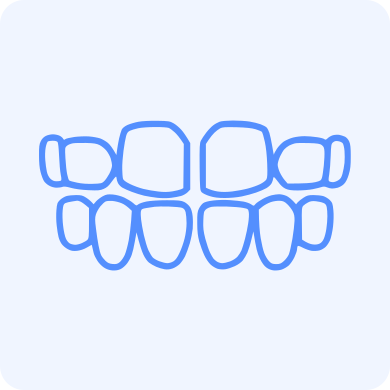
Spacing issues, also known as diastema or gap teeth, occur when you have too much space between two or more teeth. There may be too much space in the mouth for the teeth to rest comfortably together.
RELATED PROBLEMS
Spacing issues typically don't result in severe health issues, but excessive space between teeth can leave your gums unprotected and make it easy for food to get stuck between your teeth, which can cause tooth decay and gum disease. Without the support of surrounding teeth, a tooth could also become loose or even break.
TREATING SPACING ISSUES
Spacing issues are usually caused by tooth placement rather than jaw placement, so SureSmile® clear aligners may work well to shift teeth into the desired position. Talk to a doctor to find out if SureSmile is right for your particular case.
Open bite
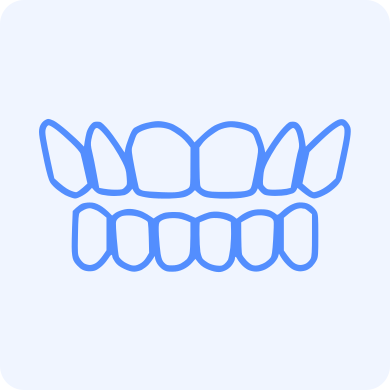
You have an open bite if your top teeth and bottom teeth touch at the back of your mouth but not at the front, or vice versa. This usually happens because the teeth are slanted in a way that prevents them from meeting in the middle. Open bites occur most often at the front of the mouth.
RELATED PROBLEMS
Having an open bite can impact your ability to perform everyday activities like speaking and eating.
TREATING AN OPEN BITE
An open bite is usually caused by tooth placement rather than jaw placement, so SureSmile® clear aligners may work well to shift teeth into the desired position. Talk to a doctor to find out if SureSmile is right for your particular case.
Crooked teeth
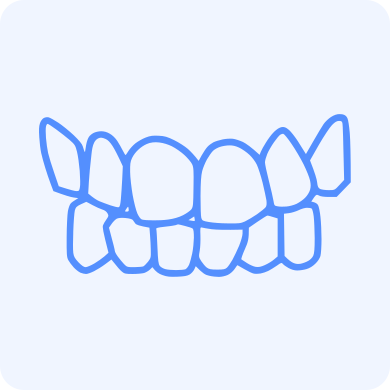
Crooked teeth refers to any type of misalignment that impacts the spacing, direction, or placement of teeth. Underbites, overbites, crossbites, open bites, spacing issues, and overcrowded teeth are all types of crooked teeth.
RELATED PROBLEMS
Crooked teeth can affect a person's confidence in their smile, which is reason enough to fix them, but they can also impact oral hygiene, potentially leading to tooth decay, gum disease, and infections of the jaw and teeth. They could even impact the ability to accomplish everyday tasks like eating, drinking, and speaking.
TREATING CROOKED TEETH
If your crooked teeth are caused by tooth placement rather than jaw placement, SureSmile® clear aligners may work for you. Talk to a doctor to find out if SureSmile is right for your particular case.
Why straighten your teeth?
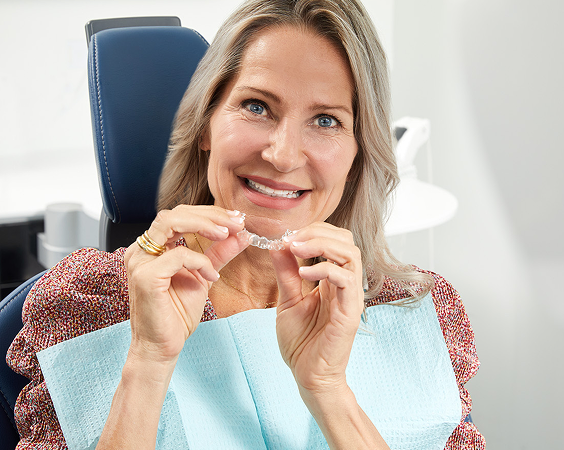
Better oral health
Malocclusion—misalignment of the teeth—can make it harder to brush and floss, which could lead to tooth decay and gum disease. It can also contribute to jaw pain and difficulty chewing. Teeth can wear down unevenly or even break. Straightening your teeth can help alleviate many of these issues.1-9

Better overall health
These are only some of the issues that may be associated with misaligned teeth: headaches, sleep apnea, gut dysfunction, heart disease, posture problems, and even Alzheimer's disease. Addressing malocclusion may reduce your risk of having dental issues affect your overall health.10-19

Physical wellness
Misaligned teeth can also affect quality of life. It may be difficult or even painful to perform daily activities like chewing or talking. A doctor can assess your case to see if straightening your teeth can address these problems.1-27

Emotional wellness
Misaligned teeth can make you feel self-conscious about your smile, and possibly contribute to anxiety and depression. Worrying about what other people will think of your teeth could lead to difficulty engaging socially or isolating yourself. Straightening your teeth could help you regain confidence.20-25

Find a SureSmile® doctor near you
- 1 Abe M, et al. Int J Environ Res Public Health. 2022;19(6).
- 2 Ekuni D, et al. Eur J Orthod. 2011;33(5):558-563.
- 3 Helm S, et al. Acta Odontol Scand. 1989;47(4):217-221.
- 4 Bernhardt O, et al. J Orofac Orthop. 2021;82(5):295-312.
- 5 Ribeiro-Lages MB, et al. J Oral Rehabil. 2020; 47(10):1304-1318.
- 6 Lal S, et al. Bruxism management. StatPearls [Internet]. StatPearls Publishing; 2023.
- 7 Lynch CD, et al. J Can Dent Assoc. 2002;68(8):470-475.
- 8 Sarode GS, et al. J Oral Maxillofac Pathol. 2013;17(2):222-227.
- 9 Clark G. The Dentist's Guide to Tooth Erosion, Attrition, Abrasion & Abfraction. Herman Ostrow School of Dentistry of USC. Updated March 4, 2021. Accessed May 18, 2023. https://ostrowonline.usc.edu/dental-erosion-attrition-abrasion-abfraction
- 10 Bernhardt O, et al. J Clin Periodontol. 2019;46(2):144-159.
- 11 Javali MA, et al. Saudi J Med Med Sci. 2020;8(2):133-139.
- 12 Choi SH, et al. Am J Orthod Dentofacial Orthop. 2016;149(3):384-390.
- 13 Proff P. J Orofac Orthop. 2010;71(2):96-107.
- 14 Emmi M, et al. J Oral Rehabil. 2023.
- 15 Kaselo E, et al. Stomatologija. 2007;9(3):79-85.
- 16 Gesch D, et al. Angle Orthod. 2004;74(4):512-520.
- 17 Gesch D, et al. Angle Orthod. 2005;75(2):183-190.
- 18 Mohlin BO, et al. Angle Orthod. 2004;74(3):319-327.
- 19 Shevel E. S Afr Dent J. 2001;56(2):99-102.
- 20 Liu S, et al. Crit Rev Microbiol. 2023:1-11.
- 21 American Orthodontic Society. How Orthodontics Affects Your Dental Patient's Sleep Apnea. American Orthodontic Society. Updated January 2, 2022. Accessed 15 May, 2023. https://orthodontics.com/how-orthodontics-affects-patients-sleep-apnea/.
- 22 Banabilh SM. J Orthod Sci. 2017;6(3):81-85.
- 23 Armingohar Z, et al. J Oral Microbial. 2014;6(1): 23408.
- 24 Sanz M, et al. J Clin Periodontol. 2020;47(3):268-288.
- 25 Demmer RT, et al. Diabetes Care. 2010;33(5):1037-1043.
- 26 Casanova L, et al. Br Dent J. 2014;217(8):433-437.
- 27 Koike S, et al. J Oral Rehabil. 2013;40(8):574-581.